TL;DR: Selling your Lake Tahoe home in 2026 looks different than it did in 2024. The luxury segment is surging, inventory is healthier, and pricing strategy matters more than ever. This guide breaks down the current market, the right time to list, how to price for $2M+ buyers, the marketing that actually moves a high-end Tahoe property, and the tax moves to consider before you sign a listing agreement.
By Lukas Brassie | The Brassie Group | Compass
If you're thinking about selling your Lake Tahoe home in 2026, the playbook has changed. The "list it and they will come" approach that worked during the pandemic boom is over. So is the doom narrative that scared sellers off in 2024. What's left is a more interesting market: one where well-priced, well-marketed luxury homes are commanding strong prices, and everything else is sitting.
This guide is for sellers operating at the higher end of the Tahoe and Truckee market. It covers what's actually happening right now, when to list, how to price, how to market a $2M+ home in 2026, and the tax structures every Tahoe seller should at least understand before signing a listing agreement.
No fluff. Just what matters.
What the Lake Tahoe Real Estate Market Looks Like in 2026
I've watched this market shift dramatically year over year. As of early 2026, Incline Village alone has already recorded 13 sales over $5 million, compared to just 4 in the entire prior year. That is not a small change. That is a structural shift in where the luxury buyer is putting capital, and Tahoe is firmly in the conversation.
The macro context backs it up. Compass's 2026 Housing Market Outlook projects flat national prices, mortgage rates around 6.4%, and sales volume up 4 to 5% year over year. More importantly for Tahoe sellers, Compass forecasts the luxury segment will continue to outperform because high-end buyers are less rate-sensitive, often pay cash, and are still benefiting from strong financial markets.
Sotheby's 2026 Luxury Outlook adds another layer. Only 51% of luxury homebuyers in 2025 purchased a primary residence, meaning nearly half are buying second or third homes. Tahoe is exactly the kind of property they're buying. The same report points to roughly $6 trillion in inherited wealth that changed hands globally in 2025, creating a younger, well-capitalized buyer pool that views real estate as a place to park money for the long haul.
Translation: the demand for what you own is strong. The question is whether your sale strategy is good enough to capture it.
When Is the Best Time to Sell a Home in Lake Tahoe?
The best time to sell a home in Lake Tahoe is generally late spring through early summer (April through July), when buyer activity is highest and visiting Tahoe is at its most appealing. Luxury and lakefront properties can also perform well in late summer and even early fall, when serious second-home buyers are on the ground and emotionally connected to the area.
The national data supports the spring window. Zillow's 2024 sales analysis found that homes listed in late May earned roughly 1.6% more, which translates to several thousand extra dollars on a typical home and meaningfully more on a luxury one. NAR's seasonal research shows median days on market drops to 31 days in June compared to 49 days in winter. Realtor.com has identified mid-April specifically as the strongest single week to list, with sellers potentially netting up to $34,000 more.
Tahoe has its own rhythm on top of that. Snow on the ground hides landscaping and dampens the lifestyle pitch. Summer puts the lake front and center. For lakefront homes specifically, getting your listing live before Memorial Day weekend is often the difference between selling at peak interest and selling into a thinner late-season market.
There are exceptions. If you own a true ski-in/ski-out property in Northstar or Palisades, the winter market can be your best move. And if you own something genuinely rare, a lakefront estate, a legacy compound, the right buyer can show up in any month, and the calendar matters less than the strategy.
How Should You Price a Luxury Home in Lake Tahoe?
The right pricing strategy in 2026 is to price slightly below comparable inventory to drive multiple offers and momentum, not above it to "leave room to negotiate." Buyers in this market are informed, patient, and willing to wait. Overpriced listings sit, lose buyer attention, and almost always sell for less than they would have at a sharper initial number.
The data on the local market makes this clear. Incline Village luxury listings averaged 129 days on market through late 2025, more than four months. That is the cost of getting price wrong. A property that is fairly priced and well-presented can sell in under 60 days, sometimes in under 30. The gap between the two is often the gap between a thoughtful pricing strategy and an aspirational one.
Here is what actually works in the current Tahoe market:
Anchor to recent comparable sales, not list prices. What's listed across the street tells you nothing about value. What sold last quarter, at what discount to list, tells you everything.
Account for the micro-market. A home in Upper Tyner does not comp to a home on the Truckee River. A condo in Northstar does not comp to a condo at Lakeshore Terrace. A pricing strategy that treats Tahoe as one market is a pricing strategy that gets you 10 to 15% under value.
Stress-test the price against carrying costs. Every additional month on market costs you mortgage interest, property taxes, insurance, HOA dues, and negotiating leverage. Stale listings invite low offers.
Use real-time data, not last year's instincts. The Tahoe market in early 2026 is not the market of summer 2024. Pricing off old comps is one of the most expensive mistakes a seller can make right now.
If you want a starting point on what your home might be worth, you can get a free Lake Tahoe home valuation on my website. That number is a directional reference, not a final answer. The real number comes from a conversation about your specific property, your timeline, and your goals.
Marketing That Actually Sells a $2M+ Tahoe Home
For a luxury Tahoe property, marketing is not a checklist. It is the entire game. Most of your buyers do not live here. They are searching from San Francisco, Los Angeles, New York, Texas, and increasingly the Pacific Northwest, and they will form an opinion about your home in the first three seconds of seeing it online.
That makes presentation a high-leverage decision. Here is what the data and the experience say.
Professional photography is non-negotiable. NAR data shows that homes with high-quality photography sell 32% faster, with average days on market of 89 versus 123 for lower-quality listings. Listings with professional photos can close between $934 and $116,076 higher than comparable listings with amateur photography. On a $3M Tahoe home, the upside is significant.
Video drives buyers from awareness to action. Listings with video receive 403% more inquiries than those without. For a Tahoe home where the buyer is often three states away, a well-shot video walkthrough is the closest thing to a private showing they will get before they fly in.
Staging is no longer optional at the high end. The 2025 NAR Profile of Home Staging found that 49% of sellers' agents observed reduced days on market when homes were staged, and 29% saw a 1 to 10% increase in offer value. RESA's Q1 2025 data tracked an average return of $23.34 for every $1 invested in professional staging. At a $3M to $5M price point, staging spend is rarely a question of cost. It is a question of conversion.
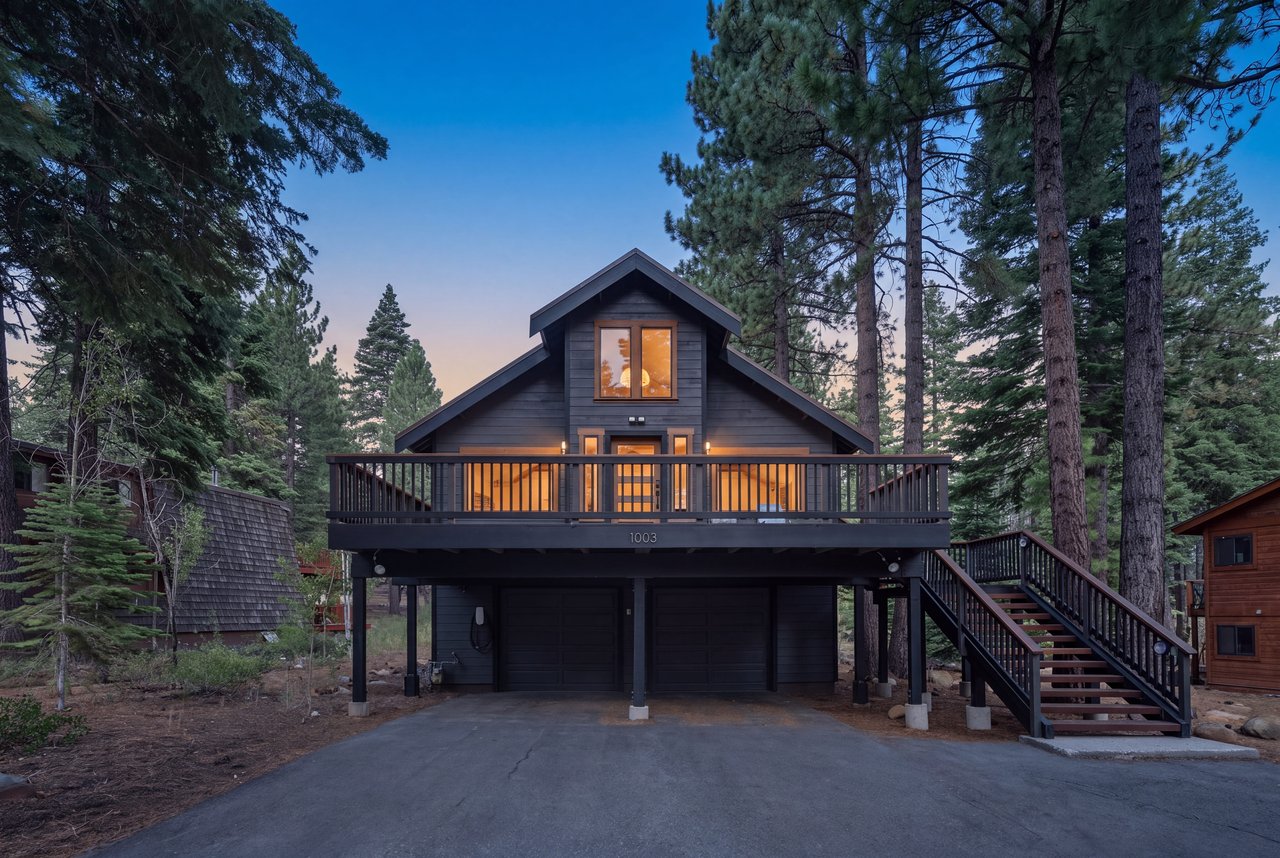
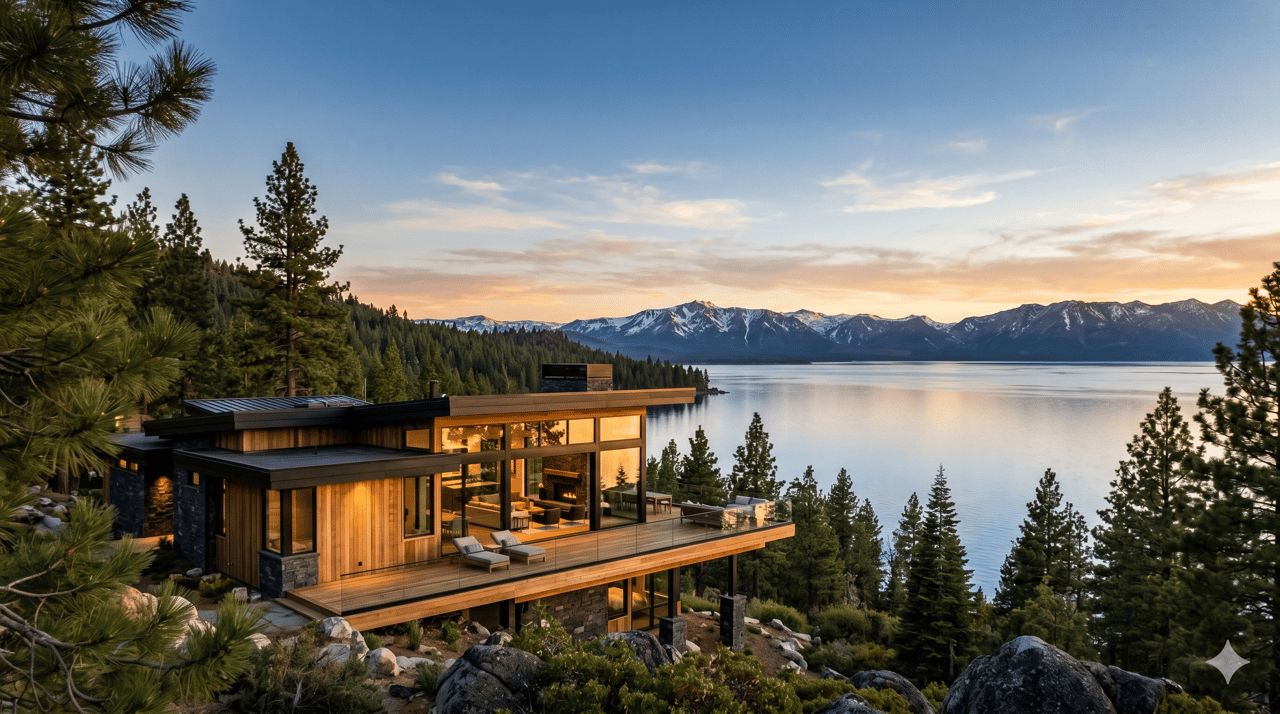
Drone, twilight, and lifestyle imagery matter for Tahoe specifically. Aerial shots that show your proximity to the lake, the ski resort, or the surrounding forest do work that a wide-angle interior cannot. Twilight photos drive higher click-through rates. These are standard at the luxury level.
Distribution beyond the MLS matters more than most sellers realize. Compass operates a Private Exclusives network that lets us pre-market your home to a national pool of qualified buyers before it hits the public market. For sellers who want discretion or want to test pricing without burning days on the public DOM clock, this is a significant strategic tool.
If your property needs work before listing, the Compass Concierge program can fund staging, painting, landscaping, and minor renovations upfront, with no interest, paid back from your sale proceeds. For Tahoe sellers preparing a $2M+ property for market, it is one of the most underused advantages in the business.
Should You Hold or Sell Your Tahoe Property in 2026?
For most Lake Tahoe sellers, 2026 is a strong year to sell, especially in the luxury and lakefront segments. Buyer demand at the top end is up sharply year over year, inventory is healthier than it was during the pandemic squeeze, and the wealth transfer driving high-end purchases shows no sign of slowing.
The case for selling now rests on three things.
First, the buyer pool is real and well-capitalized. The 13 luxury sales over $5 million in Incline already this year point to active, decisive buyers writing offers. Compass's outlook reinforces it nationally.
Second, the structural scarcity premium that defines Tahoe is not going away. The Tahoe Regional Planning Agency limits new shoreline development. IVGID amenities are tied to a fixed pool of parcels. Nevada tax advantages remain in place. If your property checks any of these boxes, the long-term value story is intact, and you are selling into a market that understands it.
Third, the cost of waiting is real. Carrying costs, insurance increases, deferred maintenance, and the simple reality that markets cycle all argue against indefinite hold strategies. If you are seriously considering selling within the next two years, 2026 likely beats 2027 from a market-timing standpoint.
There are exceptions. If your property is in a transitional micro-market, if it needs significant work to compete, or if your tax situation makes a 1031 exchange or a basis step-up a better fit, the answer is more nuanced. That is a conversation, not a blanket recommendation.
For a deeper look at how the Incline Village luxury market is performing across price points, my breakdown of what $3M to $10M buys in Incline Village luxury real estate covers the current landscape in detail.
What Tax Strategies Should Lake Tahoe Sellers Know About?
The two tax frameworks every Lake Tahoe seller should understand are the Section 121 primary residence exclusion and the Section 1031 like-kind exchange. The first lets primary residence sellers exclude up to $250,000 of gain (single) or $500,000 (married filing jointly) from federal capital gains tax. The second lets investment property sellers defer all capital gains by reinvesting in like-kind real estate. Each applies to a different type of seller, and the rules are unforgiving.
For primary residences: IRS Publication 523 spells out the eligibility test. You generally need to have owned and lived in the home for at least 2 of the last 5 years. If you qualify, the exclusion can save you tens of thousands in capital gains tax. If you don't, none of the gain is shielded.
For second homes and investment properties: a 1031 exchange under IRS rules lets you defer capital gains by rolling proceeds into another investment property. The catch is timing. You have 45 days from the sale to identify replacement properties in writing, and 180 days total to close. You must use a qualified intermediary. The replacement property must be of equal or greater value to defer the full gain. Pure second homes (not rented) generally do not qualify, so the property typically needs a documented investment use case.
A few things every Tahoe seller should think about before listing:
Confirm your status with your CPA early. The line between "vacation home" and "investment property" is not always obvious to the IRS. Document use, rental history, and intent now, not after closing.
California vs. Nevada matters. California has a 13.3% top state income tax rate. Nevada has none. If your sale will close while you're still a California resident, plan accordingly. If you've already established Nevada residency on a Nevada-side property, the math is different.
Cost basis is everything. Every dollar you've put into capital improvements over the years can reduce your taxable gain. Pull receipts before you list, not after.
I am not a CPA, and nothing here is tax advice. Talk to your accountant before you list. The five-figure savings on the right tax structure usually exceed any commission discount you might be tempted to chase.
Why the Right Agent Matters More in This Market Than the Last One
When the market was overheated, almost any agent could sell a Tahoe home. Inventory was thin, buyers were desperate, and listings moved on momentum alone. That market is gone.
In a balanced 2026 market, the agent's job is harder and more important. Pricing has to be sharper. Marketing has to actually compete for attention. Buyer psychology has shifted, and the agent on your side has to read it correctly. Local knowledge matters at a granular level, the difference between an Upper Tyner address and a Lower Tyner address, between Lakeshore Terrace and Third Creek, between a fairway lot on the Championship Course and a wooded lot one street back. Generic mountain real estate experience is not the same as Tahoe expertise.
This is why I work with a small number of clients at a time. The luxury segment in Tahoe and Truckee rewards depth, not volume. If you are considering a sale and you want a direct conversation about your specific property and the right strategy for 2026, that is the conversation I want to have.
Ready to Talk About Selling Your Lake Tahoe Home?
The 2026 Lake Tahoe market rewards sellers who prepare carefully, price sharply, and market like the luxury segment is what it actually is: a national competition for sophisticated buyers. The strongest results go to homes that get all three right.
If you want a deeper read on the selling process, my comprehensive Tahoe seller's guide walks through everything from listing prep to closing. If you want a starting point on price, the home valuation tool on my site gives you a quick directional read.
And if you're ready to talk about your specific property and what a 2026 sale strategy could look like, reach out directly. I'll give you a straight answer on where the market is, what your home is likely worth, and whether now is the right time to move.
The Lake Tahoe market is moving. Let's get in front of it together.
Contact: Lukas Brassie | The Brassie Group | Compass Phone: (530) 412-4495 Website: thebrassiegroup.com
Frequently Asked Questions
What is my Lake Tahoe home worth in 2026? Lake Tahoe home values in 2026 vary widely by micro-market, condition, view, and lot quality. Median sale prices in North Tahoe and Truckee sit around $1.1M, while Incline Village medians have crossed $2 million in early 2026 driven by strong luxury performance. The honest answer is that any number you get from an automated tool is directional at best. A real valuation comes from comparing your specific property against recent local sales, factoring in what makes your home unique. A free home valuation through The Brassie Group is a good starting point.
How long does it take to sell a luxury home in Lake Tahoe? In the current market, a well-priced and well-marketed luxury Tahoe home typically sells within 30 to 90 days. Overpriced or poorly marketed listings can sit far longer, with some Incline Village luxury listings averaging over 120 days on market through late 2025. Pricing strategy and marketing quality are the two biggest variables. The right preparation before listing usually shortens days on market more than any other factor.
Do I need to stage my Tahoe home before selling it? For most $2M+ Tahoe listings, yes. The 2025 NAR Profile of Home Staging found that nearly half of sellers' agents observed reduced days on market when homes were staged, and roughly three in ten saw a 1 to 10% increase in offer value. At Tahoe price points, that translates directly into tens of thousands of dollars. For luxury listings specifically, where buyers expect a turnkey aesthetic, staging is closer to a requirement than an option. The Compass Concierge program can often fund staging upfront with no interest.
Can I avoid capital gains tax when selling my Lake Tahoe vacation home? It depends on how the property is classified. If it's your primary residence and you've lived in it for 2 of the last 5 years, IRS Section 121 lets you exclude up to $250,000 of gain ($500,000 married filing jointly). If it's an investment property with documented rental use, a 1031 exchange can defer the gain entirely if you reinvest in like-kind property within IRS timelines (45 days to identify, 180 days to close). Pure second homes that are neither primary residences nor investment properties have fewer options. Always confirm your specific situation with your CPA before listing.
Should I sell my Lake Tahoe home now or wait? For most Tahoe sellers, especially in the luxury segment, 2026 looks like a strong year to sell. Compass's 2026 outlook projects continued strength in the luxury tier, buyer demand at the high end has surged year over year, and inventory is healthier than during the pandemic compression. Holding longer carries real costs in carrying expenses and market timing risk. The main exceptions are properties needing significant work to compete, sellers in tax situations where waiting offers a structural advantage, or owners with no near-term intention to sell at all. A direct conversation about your specific property is the only way to answer this honestly.