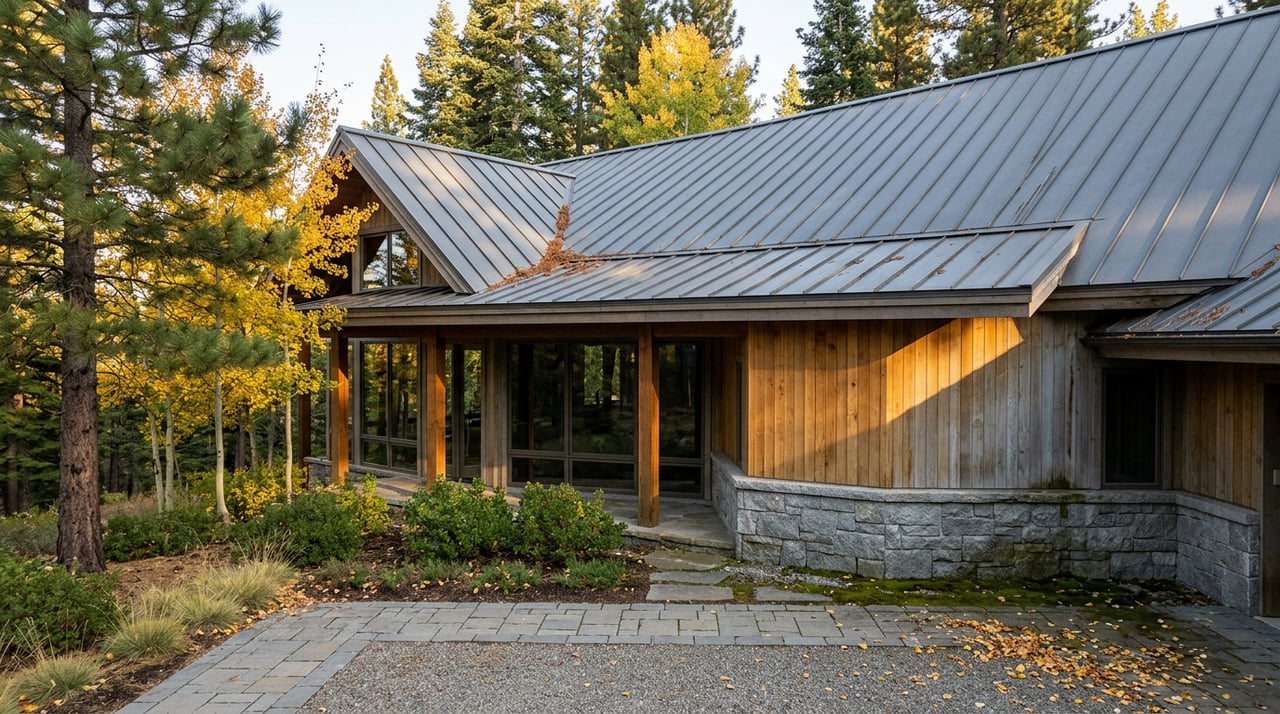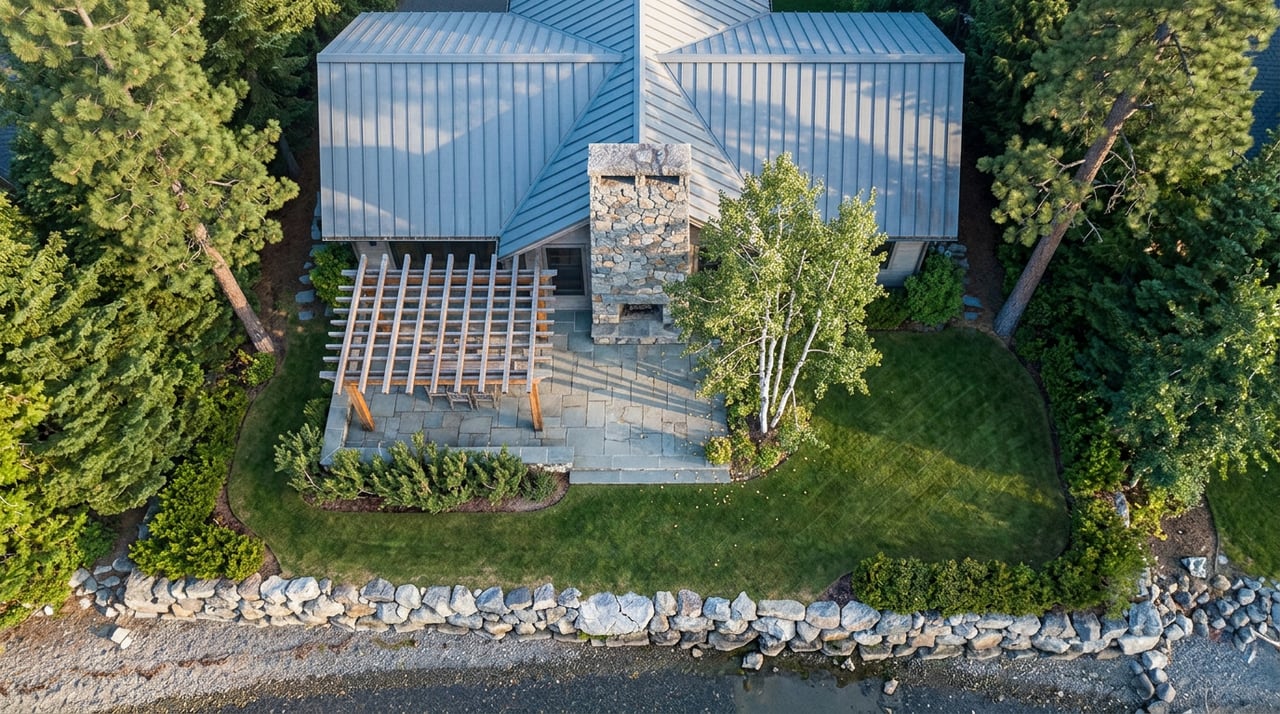
Two lakefront homes go on the market in Tahoe City within the same month, same price band, same square footage, same postcard view of the West Shore. A buyer touring both assumes the water access is roughly interchangeable. It rarely is.
One property might carry a permitted private pier with a boat lift. The other might have nothing more than a "legacy" buoy that has never been registered with the agency that actually governs the water, and could be ordered removed the day someone notices. A third might come with a deeded slip at Tahoe City Marina, which sounds like a permanent fixture until you learn that half the marina's capacity sits on a lease that runs out in 2038. The house is real property. What sits between the house and the lake is something else entirely, and it is governed by a different set of rules than the deed in your escrow file.
The Water Belongs to a Different Authority Than the Land
Lake Tahoe's shoreline is regulated by the Tahoe Regional Planning Agency, a bi-state body created by Congress in the 1960s specifically because California and Nevada couldn't coordinate development fast enough to protect the lake's clarity on their own. TRPA controls what can be built in the shorezone: piers, buoys, boat lifts, marina slips, all of it. That means a homeowner's littoral rights, the legal right to use the water adjoining their land, are real but modified by an agency whose primary mandate has nothing to do with property values.
The practical result is that an existing structure on a lakefront parcel is only as good as its paper trail. TRPA's own registration system exists because a meaningful share of moorings around the lake were never formally permitted. Those legacy buoys can look, from a listing photo, exactly like a fully legal one. The difference only shows up when a title company or a buyer's agent pulls the permit history, which is why verifying transferability during escrow matters more on a Tahoe City lakefront deal than almost anywhere else in the region.
Four Products, One Waterline
Water access at Tahoe City isn't a single amenity. It's four different products, each with its own supply mechanism and its own rules for changing hands.
| Access type | What controls the supply | How it typically transfers |
|---|---|---|
| Private pier | TRPA's biennial new-pier lottery, capped basin-wide | Runs with the parcel if the permit is current and transferable; verify in escrow |
| Shared or HOA pier | Association ownership, tied to development-era approvals | Comes bundled with membership in the HOA, not sold separately |
| Private buoy | TRPA mooring registration and a capped annual release of new permits | Registration can stay with the parcel, but unpermitted "legacy" buoys carry real risk |
| Marina slip | The marina's own finite inventory, sometimes further limited by a ground lease | Bought and sold like a small piece of real estate, independent of any home purchase |
A listing that says "lakefront" tells you which row of that table you're in. It doesn't tell you which cell.
The Lottery That Decides Who Gets a New Pier
TRPA lifted its long-standing moratorium on new shorezone structures in 2018 through what it calls the Shoreline Plan. That sounds like an opening of the floodgates. It wasn't. The plan replaced an outright ban with a hard cap: up to 128 new private piers across the entire Lake Tahoe basin over the life of the plan, released in batches of no more than 12 every two years, and awarded by lottery rather than to whoever applies first.
The most recent cycle shows how tight that actually is. TRPA received 56 pier proposals for the 2025 to 2026 allocation period. Fifty-two were eligible for the drawing. Only two single-parcel pier applications were selected to move forward, and both happened to be on the California side of the lake, the side Tahoe City sits on. On the multi-parcel side, 22 proposals were reviewed and 11 were chosen to proceed. That is the entire allocation for a two-year cycle, for the whole basin, not just the North Shore.
There's a wrinkle in the eligibility rules that catches people off guard. TRPA's own new-pier application materials list a parcel's existing access to a homeowners' association pier or recreational association pier as one of the specific factors weighed in the lottery eligibility review, alongside whether the parcel sits in a Shorezone Preservation Area or a Stream Mouth Protection Zone. Buyers sometimes assume shared access is a stepping stone toward eventually adding a private structure. The agency's own worksheet treats it as a factor to disclose and evaluate, not a formality to skip past.
New buoys work under a similar model. The Shoreline Plan authorizes up to 1,486 new private moorings basin-wide, but only 15 percent of the remaining pool is released for permitting in any given year. It's a queue with a metered valve, not an open application window.
Tahoe City's Own Bottleneck Has an Expiration Date
Beyond TRPA's basin-wide caps, Tahoe City has a second, more local constraint sitting in its own backyard. Tahoe City Marina operates in two parts. One side consists of privately owned slips that trade much like small parcels of real estate, bought and sold independent of any home purchase. The other, the marina's expansion side, sits on a leasehold from the California State Lands Commission, and that lease runs only through 2038. The cost of holding that lease is folded into the slip owners' HOA dues rather than billed separately, which means it's easy to overlook until someone asks what happens after the lease term ends.
The marina's own site currently lists its slips and buoys as fully occupied, with new interest routed to a waitlist rather than an open booking calendar. Slip sizes run from 18 to 50 feet, and seasonal rental pricing for the slips that do turn over ranges from about $6,000 to $25,000 depending on size. That's rental pricing, not purchase pricing, and it gives a sense of how much demand is chasing a fixed number of berths in the heart of town.
None of this means a slip at Tahoe City Marina is a bad asset. It means a buyer weighing a home with an included slip, or shopping separately for a slip to pair with a home that has none, should treat the 2038 lease date the same way they'd treat any other fixed-term encumbrance. Twelve years is a normal ownership horizon for a second home. Whatever the marina and the State Lands Commission negotiate when that lease comes up for renewal will shape the value of every slip that depends on it.
What Two Listings at the Same Price Actually Compare
Tahoe City's lakefront isn't a single market. Dollar Point, for instance, functions as an HOA-run enclave where the association itself owns a private beach, a pool, tennis courts, and a shared pier with a buoy field. Buying there means buying into that structure, not negotiating your own water access separately. Head the other direction along what's known locally as the Gold Coast, the older, more established shoreline stretch toward Sunnyside, and you're more likely to encounter an individual legacy structure whose permit history needs its own verification rather than an HOA amenity that comes standard.
For a home with no private water access at all, the fallback options are the handful of marinas that dot the North and West Shores: Sunnyside Marina & Watersports, Homewood High & Dry Marina, Obexer's Boat Company, Sierra Boat Company, and North Tahoe Marina, in addition to Tahoe City Marina itself. Each operates its own waitlist and its own pricing, and none of them can manufacture new capacity on demand, because the same TRPA caps that limit new piers on private lots limit expansion at commercial marinas too.
The stakes of getting this wrong are not small. On the Nevada side of the lake, agents tracking waterfront sales through 2026 have documented private piers with lifts adding several million dollars over otherwise comparable buoy-only properties, with the gap sometimes running from roughly $2 million to $5 million depending on the parcel. Tahoe City's own numbers will differ from Incline Village's or Glenbrook's, but the underlying mechanism is the same lake, the same regulator, and the same scarcity. Two homes priced identically on paper can be separated by a genuinely different asset once you account for what's actually permitted at the waterline.
Before You Write the Offer
A few questions are worth resolving before a Tahoe City lakefront offer goes in, not after:
- Is the pier, buoy, or slip currently registered and permitted with TRPA, and is that permit transferable to a new owner at closing?
- If the property relies on a shared or HOA-controlled pier, what does membership actually include, and does that access disqualify the parcel from ever applying for a private pier of its own?
- If a slip at Tahoe City Marina is part of the deal, is it on the privately owned side or the leasehold side, and what's the marina's own plan heading into the 2038 lease expiration?
- If there's no existing water access at all, is a private pier realistically obtainable given the two-year lottery cycle, or is a marina slip or buoy registration the more honest plan?
A Short FAQ
Can I just build a new pier if my Tahoe City lot doesn't have one? Only through TRPA's lottery, and the odds are narrow. The most recent two-year cycle drew from 56 proposals basin-wide and approved 11 multi-parcel and 2 single-parcel piers total. Plan around what's likely rather than what's possible.
Does a buoy count as real waterfront access? It's a legitimate form of access, but it sits below a pier or a slip in the hierarchy, and it still needs to be verified as a permitted, registered mooring rather than an unregistered legacy structure that TRPA could later require removed.
If I buy a home without any water access, is a slip at Tahoe City Marina a realistic backup? It's an option, but the marina's own listings currently show full occupancy with a waitlist, and any slip on the expansion side carries the lease running through 2038 as part of its cost structure. Confirm which side of the marina a slip sits on before assuming it functions the same as one on the privately owned side.
Water access at Tahoe City is one of the few parts of a real estate transaction where the county recorder's office and the actual usability of the property tell two different stories. Getting that story straight before you write an offer, rather than after you've fallen for the view, is where a local agent earns their fee.
If you're comparing Tahoe City lakefront listings and want the pier, buoy, or slip situation verified before you get attached to a property, The Brassie Group can walk the permit history with you. Let's talk about your highest possible return.