TL;DR: Owning a home inside the Glenbrook gates does not give you a pier, a buoy or a golf membership. Those run through three separate systems: the Glenbrook Homeowners Association, which controls the shared pier and buoy field at its discretion; the Uppaway Estates sub-association, which runs its own pier; and the private Glenbrook Club, which you apply to. A permitted pier adds roughly $500,000 to $2 million of value, so confirm in writing which access a specific listing actually carries before you write an offer.
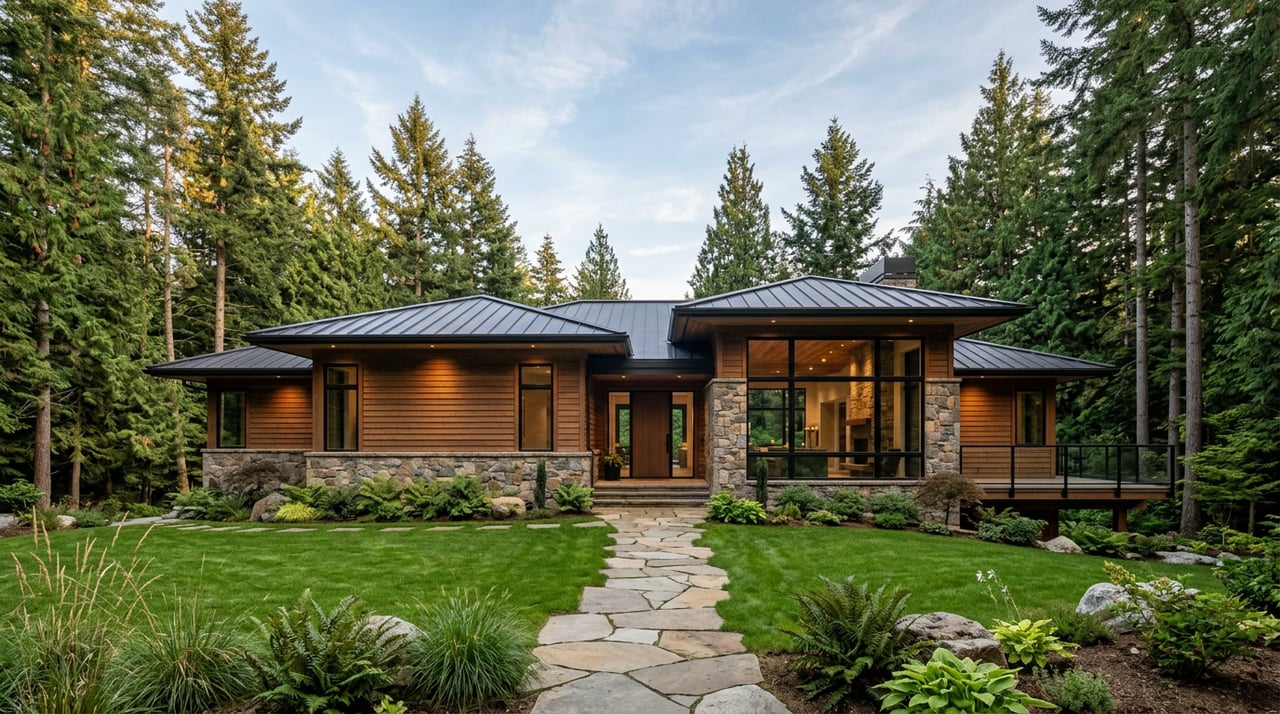
In April 2026, a 4,100-square-foot custom home in Glenbrook's gated Uppaway Estates went on the market for $4,995,000. The listing description covered the four ensuite bedrooms, the gym, the lake-view decks, and also mentioned the community pier with boat mooring, the lakeside park, and the tennis and pickleball courts. Read quickly, it sounds like the house comes with all of it. It does not, at least not automatically, and not in the way most buyers assume.
The distinction between amenities described in a listing and rights conveyed by a deed is worth understanding before you write an offer in Glenbrook. It's also the reason the neighborhood's pricing spans a wide range: an active median sitting in the mid four millions, a handful of homes trading for five times that. The variable that explains the spread isn't square footage or even lake frontage. It's which of three separate systems of access a given property has already resolved, and which ones are still pending.
Does Buying a Glenbrook Home Include Pier and Beach Access?
Not automatically. In the main Glenbrook Homeowners Association, the beaches, community pier and buoy field are shared Common Elements the Association administers at its discretion, with their own waitlists. Uppaway Estates runs a separate pier under its own sub-association. The Glenbrook Club is a private membership you apply for. Only the HOA itself transfers with the deed.
Glenbrook is a single gated address on the map, but ownership inside it runs through three distinct, non-overlapping systems.
The first is the Glenbrook Homeowners Association. For properties within its boundaries, membership is automatic with ownership and it covers the baseline: gated security, road maintenance, snow removal, landscaping. This part transfers cleanly with the property, the way HOA membership does anywhere.
The second is water access itself. In the main Glenbrook Homeowners Association, the beaches, community pier, and buoy field are owned and administered by the Association as shared Common Elements, not as rights attached to any single lot. For that system, getting a boat on the water means going through a separate allocation process, with waitlists and paperwork that exist independently of the sale.
The third is the Glenbrook Club, the private golf and tennis club built around a 9-hole, 2,715-yard course that opened in 1926. The club offers Resident and a limited number of Non-Resident memberships, and it operates entirely apart from the HOA. Owning a home inside the gates does not make you a member. Applying and being accepted does.
Uppaway Estates complicates this further because it runs its own version of the second layer. It's a separate sub-association within the broader Glenbrook footprint, with its own pier, its own lakeside park with a fire pit and BBQ area, and its own governance, distinct from the main Glenbrook Homeowners Association pier a few hundred yards down the shore. Two "Glenbrook" listings can therefore mean two entirely different pier systems, administered by two different boards, with two different waitlists.
This Isn't Theoretical
In 2005, a dispute over construction on the Glenbrook community pier ended up in front of a federal appeals panel, with the Glenbrook Homeowners Association and the Glenbrook Preservation Association on one side and the Tahoe Regional Planning Agency on the other. Two men who used the pier more than almost any other residents were named as intervening defendants in the case. The court's finding, as reported by the Tahoe Daily Tribune, was direct: the GHOA had granted them access, but their properties carried no inherent, deeded legal right to the pier itself.
That is the distinction at the heart of the court's finding. Pier access in Glenbrook runs through the Association's discretion, not through the chain of title. A judge said so two decades ago, and the underlying structure hasn't changed since.
How Much Is a Private Pier Worth in Glenbrook?
Roughly $500,000 to $2 million in added value, according to a June 2026 Lake Tahoe market report, because TRPA's permanent shoreline caps have all but closed the door on new pier construction. That premium is a big part of why a Glenbrook home can close eight figures above the neighborhood's mid-four-million median: the buyer is paying for access that has already been resolved and documented.
As of the most recent regional MLS pull on July 12, 2026, Glenbrook carried 18 active listings at a median list price of $4,522,500. Earlier in 2026, a Glenbrook property closed at $22.15 million, $2.15 million over its asking price, in eight days.
A wide gap between the typical active listing and a single closed sale isn't unusual at Tahoe's top end on its own. What makes it worth pausing on is what a permitted private pier is actually reported to be worth in this market: roughly $500,000 to $2 million in added value, according to a Lake Tahoe market report published in June 2026, with new pier construction effectively foreclosed under the Tahoe Regional Planning Agency's permanent shoreline caps. A home that closes eight figures over a typical Glenbrook median is very likely one where every layer, the buoy allocation, the pier access, the club standing, arrived already resolved and documented. A home sitting at the four-million-dollar median may carry the same square footage and a similar lake view with none of that paperwork settled yet.
The price isn't just paying for the house. It's paying for how much of the access question has already been answered. That's also why Glenbrook's median price can't tell you what a specific home is worth, and the same pier-versus-buoy gap shows up on the Tahoe City lakefront.
What Actually Needs to Be Confirmed Before You Close
A few questions separate a clean Glenbrook purchase from one that surprises you in the first summer.
- Is the parcel inside the main Glenbrook Homeowners Association, inside the separate Uppaway Estates sub-association, or one of the properties that sits behind the gates but outside any HOA boundary entirely? Each answer points to a different governing body for pier and beach access.
- What is the current status of any buoy allocated to this specific lot, and is it transferable at sale or does it require a new application? Ask for this in writing from the Association, not as a verbal assurance from the seller.
- Does the listing describe pier and beach use as included, or does it describe use that the seller currently enjoys under a separate, non-guaranteed arrangement? They describe two different arrangements.
- Is Glenbrook Club membership something you intend to pursue, and have you separately confirmed eligibility and any waitlist for Resident or Non-Resident status? It is not conveyed with the deed and it is not guaranteed by proximity to the course.
- If short-term rental income factors into your plan at all, have you checked Douglas County's Tahoe Township rules and any HOA rental policy specific to the sub-association the home sits in?
None of these questions show up on a standard comparative market analysis. All five determine what a Glenbrook purchase actually buys.
Frequently Asked Questions
Does every Glenbrook home come with a boat buoy?
No. Buoys are allocated through a waitlist process by the relevant association, either the main Glenbrook Homeowners Association or the Uppaway Estates sub-association, and allocation is not automatic with purchase. Confirm the specific lot's buoy status before assuming water access.
Is Glenbrook Club membership included when I buy a home there?
No. The club is a separate private membership with its own Resident and Non-Resident tiers, distinct from HOA dues and from pier or buoy rights.
Are there homes inside the Glenbrook gates that aren't part of the HOA at all?
Yes. Some properties sit behind the security gate but outside the formal Association boundary, which means they benefit from the gated setting without carrying the same recreational access rights as HOA parcels.
Is Uppaway Estates the same as Glenbrook?
It sits inside the broader Glenbrook footprint but runs as its own sub-association with its own pier, lakeside park and board. A listing in Uppaway Estates and a listing in the main Glenbrook HOA point to two different pier systems with two different waitlists.
Can a new pier be built on a Glenbrook lakefront lot?
Almost never. TRPA caps new private piers basin-wide at a small number every two years through a lottery, which is why an existing permitted pier carries a premium of roughly $500,000 to $2 million. Plan around the access a parcel already has.
If you're comparing Glenbrook against other East Shore or Lake Tahoe lakefront properties and want a clear read on which access rights a specific listing actually carries before you write an offer, that's the exact kind of diligence The Brassie Group runs on every Tahoe transaction. Start with our buyer's guide, then let's talk about your highest possible return.
This article is general information, not legal, tax or financial advice. Consult a qualified professional about your situation.